Kenya Launches the Electronic Warehouse Receipt System to Transform Agriculture Commodity Trade in the Country
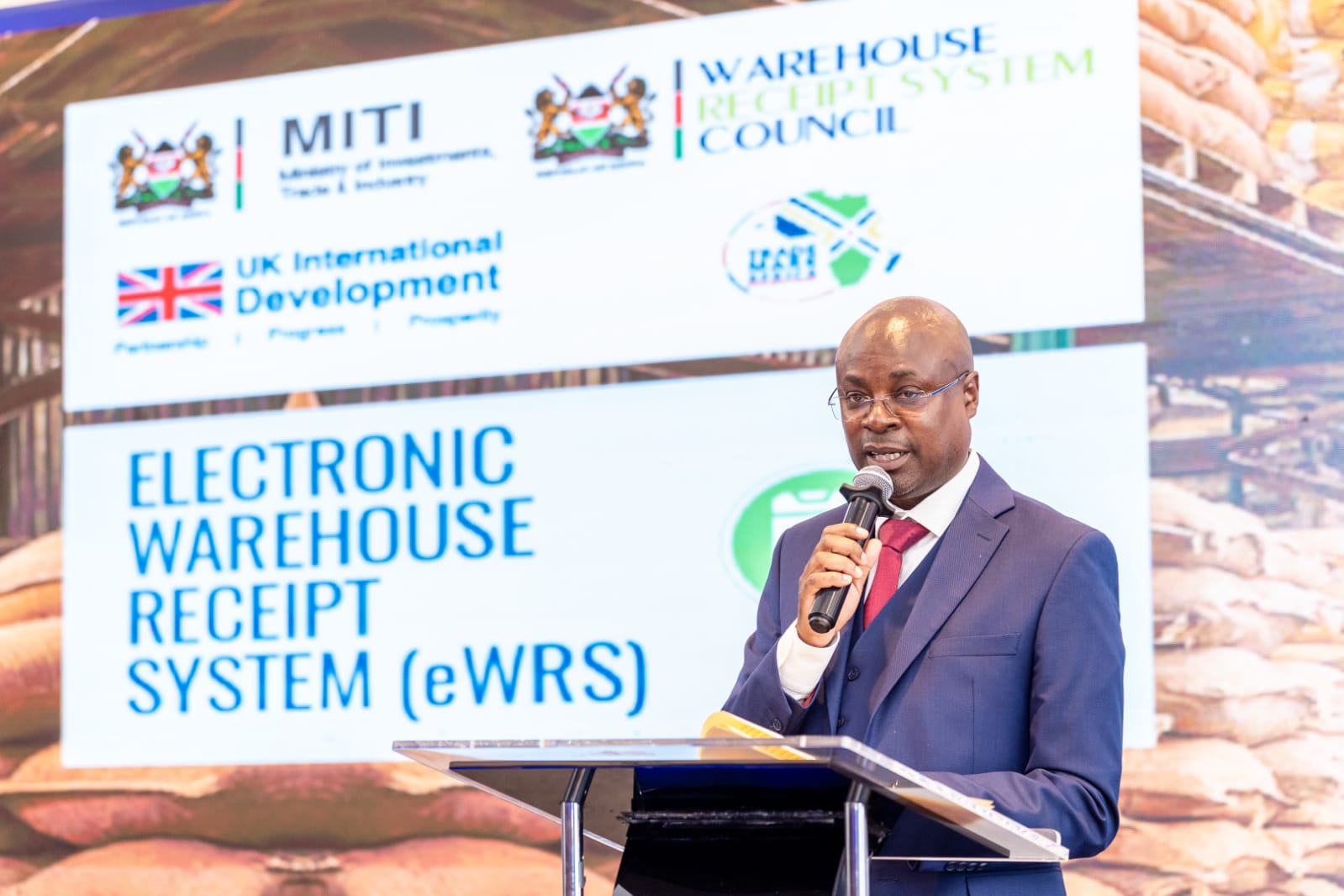
The Warehouse Receipt System Council, under the Ministry of Investments, Trade and Industry, State Department for Trade; in partnership with TradeMark Africa and with support from the British High Commission(BHC), has officially launched the Electronic Warehouse Receipt System Central Registry (eWRS-CR), a digital platform set to replace paper-based warehouse receipts with electronic records which then reduces frictions in post-harvest management, improves access to trade finance and enhances price transparency by structuring markets across the value chain.
The launch was graced by Dr. Juma Mukhwana, PS, Industry. In attendance were: Diana Dalton, Dep. High Commissioner and Development Director at BHC Kenya; Lilian Mwai, Country Director, TradeMark Africa; Patrick Mbogo, Chairman of WRSC; Lucy Komen, Ag. CEO/Registrar, WRSC; IFC officials; Elizabeth Miguda, Ag. Director of Domestic Trade; Fanuel Kidenda, Ag. CEO KOMEX and other key stakeholder representatives.
In his keynote address, PS Mukhwana affirmed the Government’s commitment to supporting the growth and sustainability of the Warehouse Receipt System.
“The Government remains committed to supporting the growth and sustainability of the Warehouse Receipt System. We will continue to provide the necessary policy support, regulatory oversight, and stakeholder coordination to ensure that the system delivers its intended impact. The e-WRS-CR is not merely a technology platform; it is a confidence-building intervention designed to catalyse participation across the agricultural value chain.”
The platform offers a single system for creating, issuing, registering, and managing electronic warehouse receipts, ensuring secure, transparent, and traceable transactions for farmers, agribusinesses, traders, financiers, and other actors.
Chairperson of the WRSC, Mr. Patrick Mbogo, highlighted the strategic significance of the Central Registry in advancing Kenya’s agricultural and economic transformation.
“The launch of the electronic central registry represents WRSC’s commitment to building a modern, secure and digitally enabled agricultural storage and trading ecosystem that serves farmers, traders, financiers and the broader economy. It lays a firm foundation for structured agricultural trade and positions Kenya as a regional leader in agricultural market innovation.”
The partnership with TradeMark Africa, with funding support from BHC, marks a significant milestone in modernizing Kenya’s agricultural markets.
Deputy High Commissioner and Development Director at the British High Commission in Kenya, Diana Dalton, reaffirmed the UK’s commitment to this agenda.
“The launch of the eWRS reflects sustained effort, institutional leadership and a shared commitment to modernizing Kenya’s agricultural markets. Kenya and the UK are injecting innovation into agriculture. Not only does this system put more money into farmers’ pockets, but it also means produce like maize can be used to take out a short-term loan, without a farmer selling their produce at a cheaper price.”Country Director for TradeMark Africa, Lillian Mwai, emphasized the platform’s strategic role in facilitating trade.
“By strengthening verification and documentation at the source, the E-WRS reduces bottlenecks before goods even enter the trade corridor. In this regard, it goes beyond being solely an agricultural reform, it is equally a strategic trade facilitation reform that enhances efficiency, transparency, and market confidence. This is how our wider ambition of the No Stop Border becomes practical, by fixing systems at source.”
The system has not only been tested end-to-end but is now fully operational and ready for national scale. Ag. CEO of WRSC, Lucy Komen, provided early evidence of the system’s success and growing adoption.
“The eWRS-CR is fully operational and ready for national scale. With 114 receipts issued, 44 have been financed, providing early evidence that the system can support warehouse receipt-based financing. Over 11,755 bags have been deposited in certified warehouses, proving adoption by warehouse operators and commodity owners. We are encouraged by the private sector’s growing embrace of this system.”
The official launch of the eWRS-CR marks its transition from a manual to a digital, efficient, and fully inclusive system for all value chain actors. It is a proof of commitment to improving farmer incomes by reducing post-harvest losses, improving access to finance, and promoting structured commodity trade, signaling a new era of transparent and efficient agricultural markets in Kenya.