Strengthening Kenya’s Structured Commodity Trade Through Regional Learning and Market Exposure
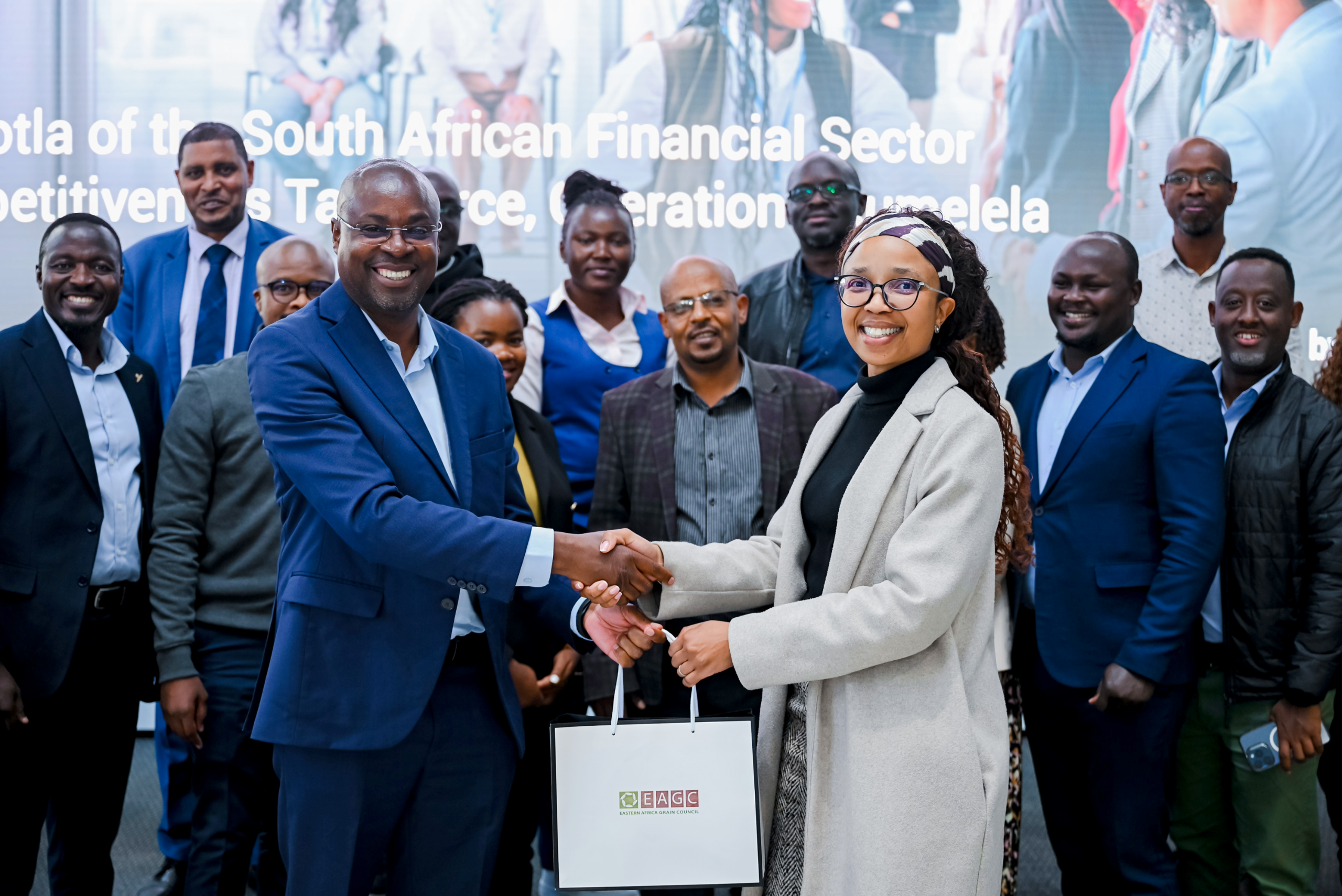
The Warehouse Receipt System Council delegation visited the Commodities Division as part of the Grain Industry Experiential Trade Mission in South Africa, organized by the Eastern Africa Grain Council. The engagement formed part of ongoing efforts to strengthen institutional understanding of structured commodity trading systems and their role in advancing efficient, transparent, and competitive agricultural markets.
The discussions focused on the mechanics of structured commodity trading and its contribution to enhancing price discovery, market transparency, liquidity, and risk management, critical pillars in the development of a resilient and efficient agricultural trade ecosystem. The engagement also provided practical insights into market systems that support informed trading, reduce market inefficiencies, and strengthen value chain coordination.
The delegation further visited the South African Grain Information Service (SAGIS) to gain insights into grain market information systems, including data collection, analysis, and dissemination mechanisms that promote transparency, market confidence, and evidence-based decision-making among grain sector participants.
In addition, the delegation engaged with the Southern African Grain Laboratory (SAGL) to learn more about grain testing, grading, and quality assurance systems that underpin credible commodity trading frameworks. The engagements highlighted the importance of robust quality assurance mechanisms in facilitating market trust, standardization, and the integrity of structured trade systems.
The experiential engagements provided strategic learning opportunities aimed at supporting the strengthening of Kenya’s domestic structured trade ecosystem, particularly in advancing the adoption of spot trading mechanisms while also informing long-term considerations for the development of a sustainable futures trading market.
Through institutional learning, regional collaboration, and exposure to international best practices, Kenya continues to strengthen efforts toward building transparent, efficient, and market-driven agricultural trading systems that enhance competitiveness, improve farmer outcomes, and support agricultural transformation.